

The job site is where everything still makes sense.
You are standing in front of the glass. You can see the rooms, the access, the doors, the odd windows, the way the sun is hitting the building, and all the little details that might matter later.
Then you leave.
That is when the measurements have to carry the job by themselves.
I have had notes that made perfect sense when I wrote them down, then looked a lot less clear later when I was trying to quote the job or figure out material. A width and height might be accurate, but that does not always tell you where the window was, how it grouped with the others, whether it needed removal, whether there was a ladder issue, or why you wrote a small note in the corner of the page.
That is the part that can create problems later. Not the measuring itself. The missing context around the measurement.
Measurements are only part of the job-site notes
Width and height are obviously the main thing. If those are wrong, everything downstream is wrong.
But measurements by themselves are not the whole job.
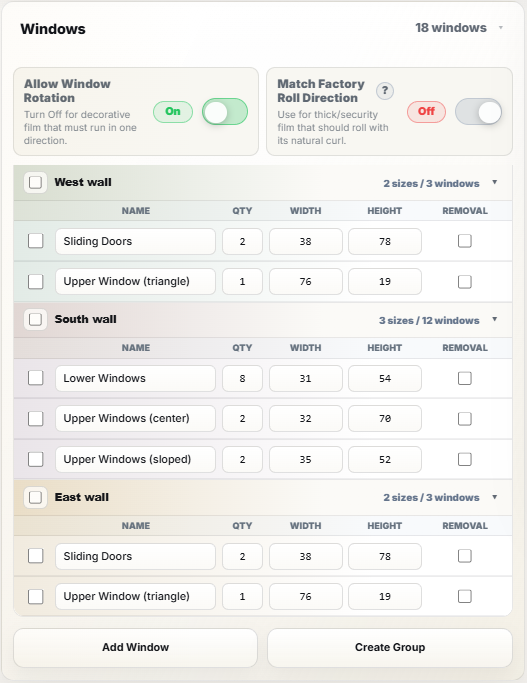
A list of sizes can tell you how much glass needs film, but it may not tell you how the job should be organized. It may not tell you which windows belong together, which ones are in the same room, which pieces are high, which ones need removal, or which ones the customer was most concerned about.
That matters when you are building the quote. It matters again when you are planning the cut layout. It matters even more if someone else is going to install the job later.
The better the notes are when you leave, the less you have to rely on memory when the job comes back around.
Name the areas in a way you will understand later
Room names and window locations do not have to be fancy. They just need to be useful.
Living room, office, front entry, west wall, conference room, storefront left, door sidelight, stairwell. Whatever makes sense for that job. The point is to give yourself a way to rebuild the job later without guessing what "W3" was supposed to mean.
This is especially helpful when the job has repeated sizes. If you have six windows that are all 36 by 60, the size alone does not tell you where they are. If one of them has removal and the others do not, or one is above a stairwell, or one needs a different note for access, the location becomes more important than the size.
I like thinking of job-site notes as a handoff to your future self. Sometimes that future self is later that afternoon. Sometimes it is two weeks later after the customer finally approves the quote. Either way, the notes need to survive the gap.
Group windows while you are still looking at them
If a job has clear groups, write them down that way.
That might be by room, by elevation, by floor, by section, or by how you plan to install the job. A house might be simple enough to group by room. A commercial job might make more sense by storefront section, office area, or elevation. There is no perfect system that fits every job.
The important thing is to group the windows while the layout of the building is still fresh.
That can make the cut plan easier to understand later. It can also make the install cleaner, because the job is not just a pile of measurements. It has structure.
A cut layout that saves film is good. A cut layout that also keeps the job organized is better. If the measurements are grouped well from the start, it is easier to make decisions that help both the material plan and the installer.
Note anything that changes the quote
Some details do not change the glass area but still affect the job.
Existing film removal is one of the obvious ones. If some windows need removal and others do not, that needs to be clear before the quote is built. The same goes for attachment, specialty access, high glass, ladder work, lifts, difficult furniture, tight work areas, or anything else that changes the time or risk on the job.
Those details are easy to remember while you are standing there. They are easier to forget once the job turns into a list of sizes.
This is where a lot of small quote issues come from. The square footage may be right, but the quote is missing the extra work attached to certain pieces of glass. That does not always ruin a job, but it does chip away at the margin and makes the work feel less organized than it should.
If something affects time, material, access, risk, or customer expectations, it is worth writing down.
Take photos that actually help
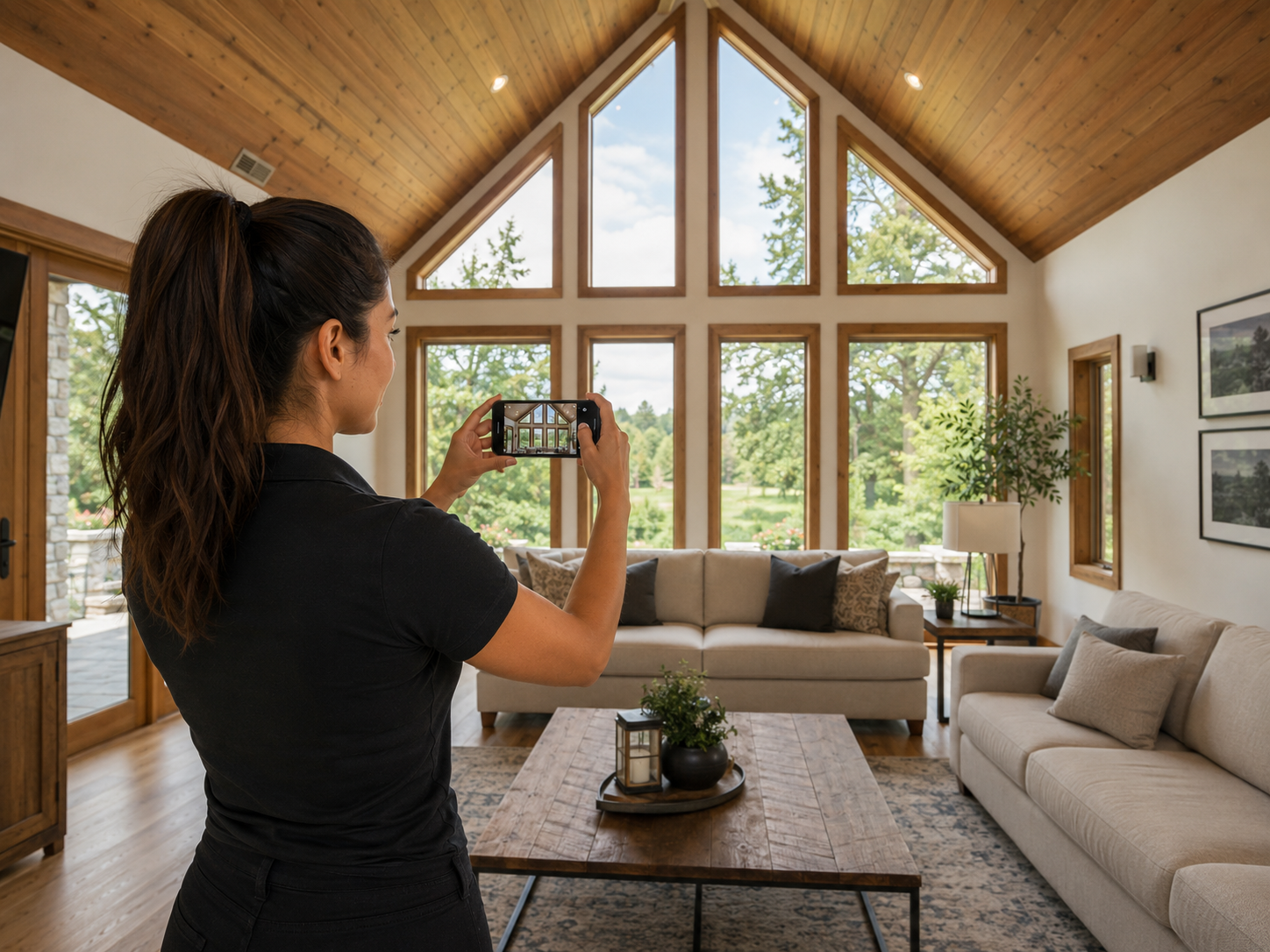
Photos can save a job note from being misunderstood later, but only if they are useful.
A wide shot of the room or elevation helps show where the windows are. A closer shot helps show details like existing film, tempered bugs, low-E labels, mullions, obstructions, ladder access, or anything unusual about the glass. Photos of the exterior can also help when sun exposure or building direction matters.
The mistake is taking a bunch of photos with no connection to the measurement list.
If you cannot tell which photo goes with which window or room, the photo may not help much later. It may still jog your memory, but that is not the same as having a clean record.
Even a simple habit helps. Take the room photo first, then the detail photos. Or write the room/window name before taking the photo. The exact method matters less than making sure the photos and measurements can be connected later.
Write down film discussions while they are fresh
If the customer is deciding between films, make a note of it.
Maybe they asked about heat. Maybe they wanted privacy. Maybe they were worried about glare on a TV. Maybe they mentioned fading, security, appearance from the outside, or keeping the house from feeling too dark.
Those details matter later when you are building the quote or following up.
They also help you avoid sending a quote that feels disconnected from the conversation. If the customer said they cared most about glare in the west-facing living room, that should probably be easy to see in your notes when you get back to the quote.
This is not about writing a novel at the job site. It is about capturing enough of the conversation so the quote still feels tied to what the customer actually asked for.
Watch for glass and film-to-glass concerns
Some jobs need more attention before a film is recommended.
Glass type, IG units, low-E coatings, tempered glass, laminated glass, spandrel, shading conditions, interior blinds, exterior overhangs, partial shading, and sun exposure can all matter depending on the film and the glass. A job may look simple from the measurement side and still need a closer film-to-glass check before the quote is finalized.
This is one area where notes and photos are especially useful.
If you see labels, take photos. If a room has heavy sun, note it. If some panes are shaded and others are not, write that down. If the customer is asking for a darker or more reflective film on glass that may need to be checked carefully, do not leave that detail floating around in your head.
The film might be great, the customer might be sold on it, and the job might still need another look once you consider the glass.
Access notes save headaches later
Access is easy to underestimate during the measure.
You may walk through a house or building, take measurements, and mentally note that one window is above a stairwell, one office is packed with furniture, or one pane is behind a desk that nobody wants moved. At the time, it feels obvious.
Later, it may just look like another window on the list.
That is why access notes matter. Ladder work, lifts, blocked windows, high glass, tight bathrooms, commercial furniture, cubicles, displays, plants, window treatments, and customer prep should all be written down if they affect the work.
This helps the quote, but it also helps scheduling and installation. A job that needs two people, a taller ladder, after-hours access, or customer prep should not be discovered on install day.
Do not trust your memory more than you have to
Experience is useful, but memory is not a system.
When you are busy, jobs start to run together. A note that felt obvious on Monday may not be obvious by Friday. A customer conversation that seemed easy to remember can get mixed with three other estimates. Even if you are a solo installer and nobody else touches the job, you still have to hand the job back to yourself later.
That is where better notes pay off.
They do not have to be beautiful. They do not have to look like an architect drew them. They just have to make the job easier to quote, plan, order, cut, and install.
The real test is simple: if you opened the job a week later, could you still understand what needed to happen?
Where Precision Film Systems fits
 Start Free Trial
Precision Film Systems starts with the measurements and job details you collect.
The software can compare roll widths, show linear feet, estimate film waste, build the cut layout, and help organize job information, but it still depends on the quality of what gets entered. Better field notes lead to better planning.
That is especially true when you are using groups, job details, selected film, removal notes, pricing defaults, or project outputs. The more complete the job information is up front, the more useful the quote and cut plan become later.
This is not about making the measure slower. It is about leaving the job site with enough information that you do not have to rebuild the job from memory.
A good measurement gets the size right.
A good job note helps the whole job make sense later.
Job-site notes for flat glass work
What should I write down when measuring a flat glass job?
At minimum, write down the width, height, quantity, and location of each window. It also helps to note room names, groups, existing film removal, access issues, glass concerns, customer preferences, and anything that could affect the quote or install.
Do I need room names if I already have window sizes?
Room names or location notes make the job easier to understand later. They are especially helpful when windows have repeated sizes or when only some areas have removal, access issues, or special notes.
Should I take photos during a flat glass estimate?
Yes. Photos can help connect the measurements to the actual job site. Wide shots help with room or elevation context, and close-up photos help capture glass labels, existing film, obstructions, access issues, and other details.
Why do job-site notes matter for cut planning?
Cut planning depends on more than total square footage. Grouping, window locations, piece direction, removal notes, and job organization can all affect how useful the cut plan is later.
How does Precision Film Systems use job-site information?
Precision Film Systems uses the measurements and job details entered by the installer or shop to compare roll widths, show linear feet, calculate film waste, and create a cut layout. Better job-site information makes the planning output more useful.